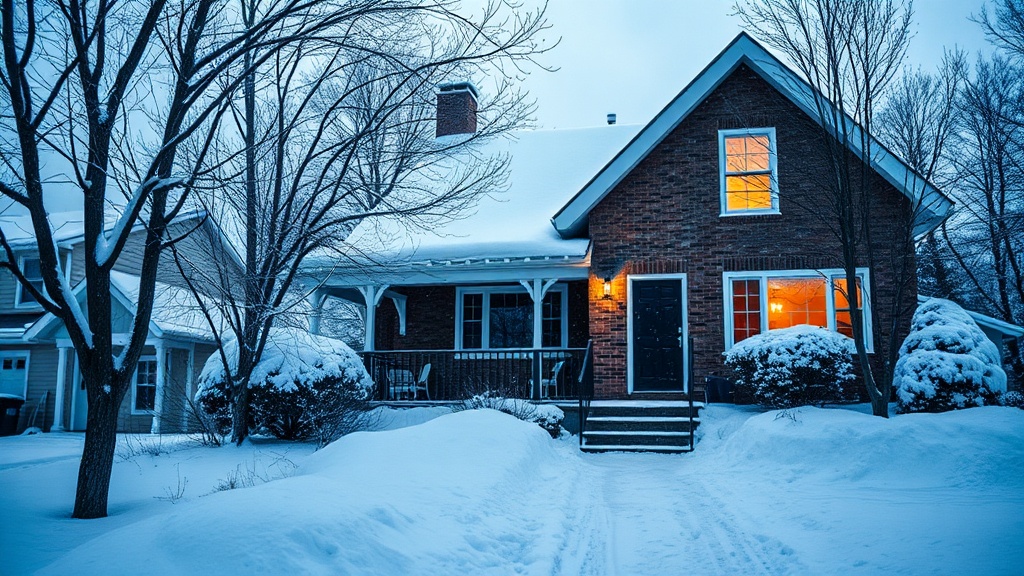
Managing Your Home Maintenance During Fort St. John Winters

Many folks in Fort St. John assume that a little snow on the driveway is the only thing you need to worry about once the temperature drops. They think a sturdy shovel and a salt spreader are enough to keep a household running. But living in the Peace River Country means our homes face much harsher realities than just a bit of slush. If you aren't looking at your heating systems, your insulation, and your water lines, you're asking for a massive headache—or a flooded basement—when the thaw finally hits in the spring.
We see it every year. A neighbor down the street in the Willow Ridge area might deal with a frozen pipe, or someone over near the North Peace River might find their furnace struggling to keep up with a sudden cold snap. Managing a home here isn't just about clearing the sidewalk; it's about proactive-maintenance-as-a-lifestyle. We've put together these practical steps to help you keep your property in top shape through our long, cold seasons.
Where should I look for heat loss in my house?
The first thing you'll want to do is check your windows and doors. In Fort St. John, the wind can be brutal, especially when it whips across the open areas around our city. If you feel a draft while sitting in your living room, that's a sign. Check the weather stripping around your doors. If it's cracked or brittle, replace it immediately. You can find plenty of weather-stripping kits at local hardware stores like Home Hardware on 100th Avenue to seal those gaps up.
Don't forget your attic insulation either. A lot of older homes in the older parts of Fort St. John have settling insulation that doesn't provide the R-value needed for our sub-zero temperatures. If your upstairs rooms feel significantly colder than your basement, it's time to look at your attic. Increasing your insulation can actually save you a decent amount on your monthly utility bills. You can check out more general home efficiency standards via the Natural Resources Canada website to see what's expected for Canadian climates.
How do I prevent frozen pipes during a cold snap?
This is the big one. We've all heard the stories of people returning from a long weekend to find a burst pipe. To prevent this, you need to identify which pipes are most vulnerable. Exterior faucets are the obvious culprits. If you have a hose connected to a tap on the side of your house, disconnect it. A connected hose prevents the faucet from draining, which leads to ice buildup and cracked pipes. If you have a frost-free hydrant, make sure it's actually functioning correctly.
For interior pipes, especially those in unheated areas like a garage or a basement utility room, consider wrapping them in heat tape or insulation. If a freeze is actually happening, don't just blast the heat. Open your cabinet doors to allow some warmth to reach the plumbing. If a pipe is already frozen, use a hair dryer or a warm towel—never a blowtorch or an open flame—to gently thaw it. Using high heat can actually crack the metal or plastic. We've seen people make that mistake too many times in our community.
| Problem Area | Action to Take | Frequency |
|---|---|---|
| Exterior Faucets | Remove hoses and drain lines | Every Autumn |
| Basement Pipes | Insulate exposed lines | Once a Year |
| Windows/Doors | Check weather stripping | Twice a Year |
| Attic/Ceiling | Check insulation levels | Every 3 Years |
What are the best ways to maintain my furnace?
Your furnace is the heart of your home during a Fort St. John winter. If it fails, the temperature in your house can drop to dangerous levels in just a few hours. The most basic thing you can do is change your furnace filter. A clogged filter forces your system to work harder, which uses more electricity and can eventually lead to a burnout. We recommend checking your filter every month during the heavy heating season.
Also, keep an eye on your ventilation. If you have a furnace in a basement or a utility closet, ensure there is enough airflow. Don't stack boxes or clutter around the unit. If you notice strange noises—like banging or whistling—don't ignore it. It's better to call a local technician early than to wait for a total system failure. Keeping a regular maintenance schedule is the best way to ensure you aren't left shivering in the middle of January.
Lastly, consider your outdoor-to-indoor transitions. If you have a mudroom or a heavy-duty entryway, use it. It keeps the melting snow and salt from being tracked into the main living areas, which helps maintain your floor's integrity and keeps the moisture levels in your house more stable. Staying ahead of these small details is what makes the difference between a comfortable winter and a stressful one for our families here in Fort St. John.