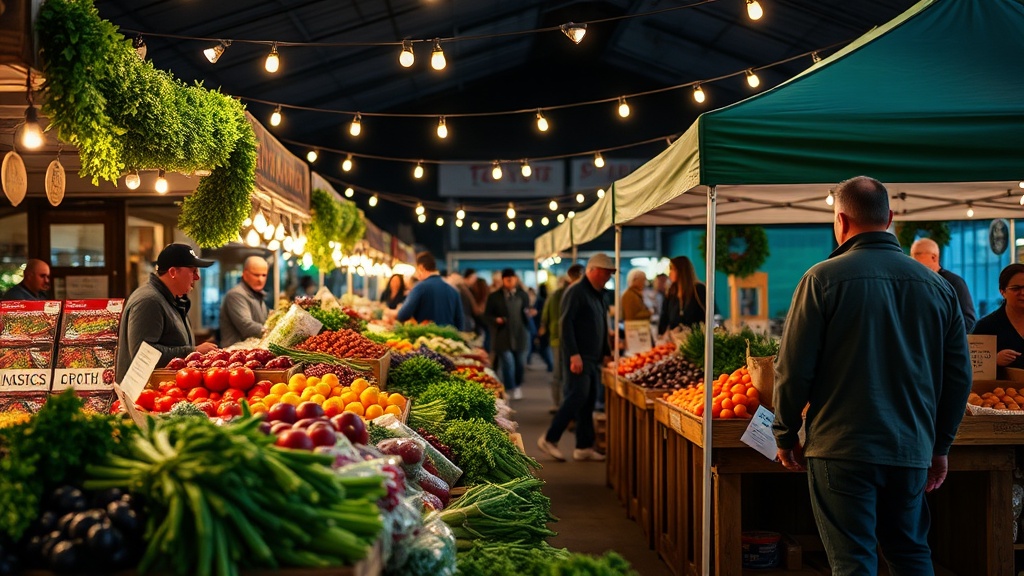
Why Fort St John Farmers Market Remains the Heart of Our Community

The Fort St John Farmers Market represents something far more valuable than a weekend shopping destination. In a city where winter stretches long and neighbors sometimes don't meet for months, this market creates connection—week after week, season after season. Whether you're hunting for fresh produce, searching for handmade gifts, or simply craving that sense of belonging that big-box stores can't replicate, understanding what makes our market tick will change how you experience Fort St John. Here's what sets this community institution apart from anything else in northeastern BC.
What Makes the Fort St John Farmers Market Different from Grocery Stores?
The Fort St John Farmers Market delivers something no supermarket can replicate: relationships built on trust, transparency, and shared community investment. When you buy carrots from Karen at Root Cellar Farm, you're not just getting vegetables—you're getting her cell number in case you have questions about storage. That direct line to producers? It's built into the market's DNA.
Unlike chain retailers that rotate staff quarterly, vendors at the Fort St John Farmers Market have occupied the same spots for years. You'll find Don from Peace River Honey setting up at the north entrance every Saturday since 2014. His bees pollinate local canola fields. His honey carries the terroir of our specific corner of the Peace Region—not a blend from three provinces away.
Here's the thing about freshness: produce at the Fort St John Farmers Market travels an average of 47 kilometers from farm to table. Compare that to the 2,400 kilometers most grocery store vegetables log. That difference matters in taste, nutrition, and environmental impact. You're not burning fossil fuels to move tomatoes from Mexico when Dave at Sunset Acres Greenhouse grows them 15 minutes north of town.
Price transparency works differently here too. Ask a vendor why their pork costs what it does, and you'll get an education in feed prices, processing fees, and the realities of raising heritage breeds in northern climates. No corporate pricing algorithms—just honest conversations about what fair food actually costs.
When and Where Can You Find the Fort St John Farmers Market?
The Fort St John Farmers Market operates year-round with seasonal location changes that reflect our community's practical needs. From May through October, you'll find vendors gathered outside the North Peace Cultural Centre on 100th Street—typically 80 to 100 stalls spreading across the parking lot and spilling onto the adjacent green space. Winter months (November through April) move everything indoors to the same building's community hall, where 40 to 50 dedicated vendors keep local food accessible despite the cold.
Summer hours run 9:00 AM to 2:00 PM every Saturday. The early start accommodates farmers who've been up since 4:00 AM harvesting. It also beats the afternoon wind that whips through Fort St John most summer days—worth noting if you're planning to bring small children or lightweight shopping bags.
Winter hours shift slightly: 10:00 AM to 2:00 PM, same Saturday schedule. The reduced vendor count reflects supply realities—no fresh tomatoes in January—but what remains is curated and high-quality. You'll find root vegetables, preserved goods, frozen meats, greenhouse greens, and crafts that make practical Christmas gifts.
| Season | Location | Hours | Vendor Count | Best For |
|---|---|---|---|---|
| Summer (May-Oct) | North Peace Cultural Centre - Outdoor | Sat 9 AM - 2 PM | 80-100 vendors | Fresh produce, plants, peak selection |
| Winter (Nov-Apr) | North Peace Cultural Centre - Indoor Hall | Sat 10 AM - 2 PM | 40-50 vendors | Root vegetables, preserves, crafts, meats |
| Special Events | Various locations | Check market website | Varies | Christmas markets, harvest festivals |
Parking can get tight during peak summer weeks. The catch? Most locals know the secret: the lot behind the Totem Mall (three blocks south) always has space, and the walk gives you time to plan your shopping strategy. The market also runs a volunteer shuttle program for seniors and mobility-limited shoppers during winter months—contact them directly to arrange pickup.
Who Are the Vendors You'll Meet at the Fort St John Farmers Market?
The Fort St John Farmers Market hosts a rotating cast of approximately 120 registered vendors, though typically 60 to 80 appear on any given Saturday. These aren't hobbyists selling surplus zucchini—they're legitimate small business owners whose families depend on market revenue. Understanding who's who helps you shop smarter and build relationships that pay dividends.
Primary producers make up roughly 40% of vendors: vegetable growers like Sunset Acres and Root Cellar Farm, livestock producers such as Peace River Bison and Northern Raised Meats, and egg sellers operating small flocks within city limits. These folks wake up before dawn on market days. They're usually packing up by 1:30 PM even though the market runs until 2:00—their products sell out.
Value-added food producers occupy another 30%: bakers, preservers, sauce makers, and specialty food crafters. Look for Bread and Butter Bakery's sourdough (the rosemary olive loaf disappears fast), Peace Preserves' garlic dill pickles, and the Filipino-inspired sauces from newcomer vendor Lola's Kitchen. These products represent genuine entrepreneurial risk—most started as cottage operations before scaling up.
The remaining 30% includes artisans, crafters, and service providers. Woodworker Jim Henderson sells cutting boards made from beetle-kill pine harvested within 100 kilometers of Fort St John. Textile artist Sarah Chen offers hand-dyed wool from her own sheep. The market maintains strict guidelines about "maker authenticity"—no mass-produced Alibaba resellers allowed.
That said, vendor quality varies. Not every stall represents equal value. The bread vendor near the south entrance (we won't name names) has received consistent complaints about inconsistent rising. Meanwhile, the grandmother selling knitted dishcloths three stalls down? Those cotton loops outlast anything from Canadian Tire, and she's been perfecting her pattern for fifteen years. Community knowledge matters—ask regular shoppers for their vendor recommendations, or lurk on the Fort St John Community Facebook group where market intelligence gets shared freely.
What Should You Buy at the Fort St John Farmers Market?
Strategic shopping at the Fort St John Farmers Market requires understanding what's actually worth your money—and what's better purchased elsewhere. Some products offer undeniable advantages here. Others carry premium prices without proportional quality gains.
Definitely buy: root vegetables (carrots, potatoes, beets, parsnips) from Peace River valley farms. The soil and climate here produce sweeter, denser roots than anything shipped from California. Free-range eggs from local producers cost $6 to $7 per dozen versus $4.50 at Safeway, but the yolks stand up taller and the flavor justifies the difference. Honey from Peace River Apiaries—raw, unpasteurized, and hyperlocal—supports regional bee populations while tasting demonstrably better than commodity honey.
Fresh baking from market vendors beats grocery store alternatives at similar prices. The sourdough from Bread and Butter Bakery ($8 per loaf) stays fresh longer than commercial bread and contains no preservatives. Seasonal preserves make practical sense too—when local tomatoes flood the market in August, savvy shoppers buy flats for $15 and turn them into sauce that costs $4 per jar at retail.
Worth noting: some market products don't justify their premiums. Out-of-season vegetables grown in heated greenhouses carry steep prices ($8 for a head of lettuce in March) without nutritional advantages over California imports. Artisan crafts—while beautiful—often cost 3x mass-produced alternatives. If you're furnishing a rental property, maybe skip the $180 hand-forged coat rack.
How Does the Market Strengthen Fort St John's Community Fabric?
Beyond commerce, the Fort St John Farmers Market functions as our city's unofficial town square. In a community where many residents work rotational shifts at Site C, oil camps, or the hospital, Saturday market attendance becomes a ritual of reconnection. You see people here you won't encounter at Walmart.
The market hosts nonprofit tables weekly: the Fort St John Public Library runs summer reading promotions, the North Peace Hospice Society recruits volunteers, and the local NDP riding association (yes, politics happens here) gathers signatures. These organizations reach demographics that ignore Facebook ads and don't answer unknown numbers. Physical presence matters in Fort St John.
Children's programming runs every market day—a small thing, but significant in a city where winter entertainment options feel limited. Kids can pet rabbits from 4-H members, sample honeycomb, or participate in the "market scavenger hunt" that teaches them to identify vegetables. Parents appreciate the contained space (fenced during summer months) where children gain independence without traffic danger.
Here's the thing about newcomers: the market accelerates their integration into Fort St John society. Moving to a resource town where most social networks form through workplaces or churches can feel isolating. The market offers neutral territory—no membership requirements, no dress codes, no prior connections needed. Vendor Maria Santos reports that several close friendships started with casual conversations across her tamale table.
The market also anchors our local food security. When COVID-19 disrupted supply chains in 2020, Fort St John residents with established vendor relationships maintained access to fresh food while grocery shelves emptied. That resilience isn't abstract—it's the practical result of decentralized, relationship-based food systems that the market has nurtured for decades.
Fort St John's identity gets expressed here in ways that official channels can't replicate. The mix of agricultural producers, Indigenous artisans, Filipino food vendors, and long-time Peace Region families creates something genuinely representative of who we actually are—not the simplified version in municipal brochures, but the complicated, multicultural, resource-dependent reality of life at 56 degrees north.
You'll find the market imperfect, crowded on peak Saturdays, occasionally muddy, and definitely lacking the climate control of indoor shopping. Those friction points aren't bugs—they're features. They remind us that community requires showing up, tolerating inconvenience, and choosing connection over optimization. Fort St John deserves that kind of commitment. The farmers market has been holding space for it since 1989.